Another Kind of Harvesting
Computer, paper, scissors, and back again.
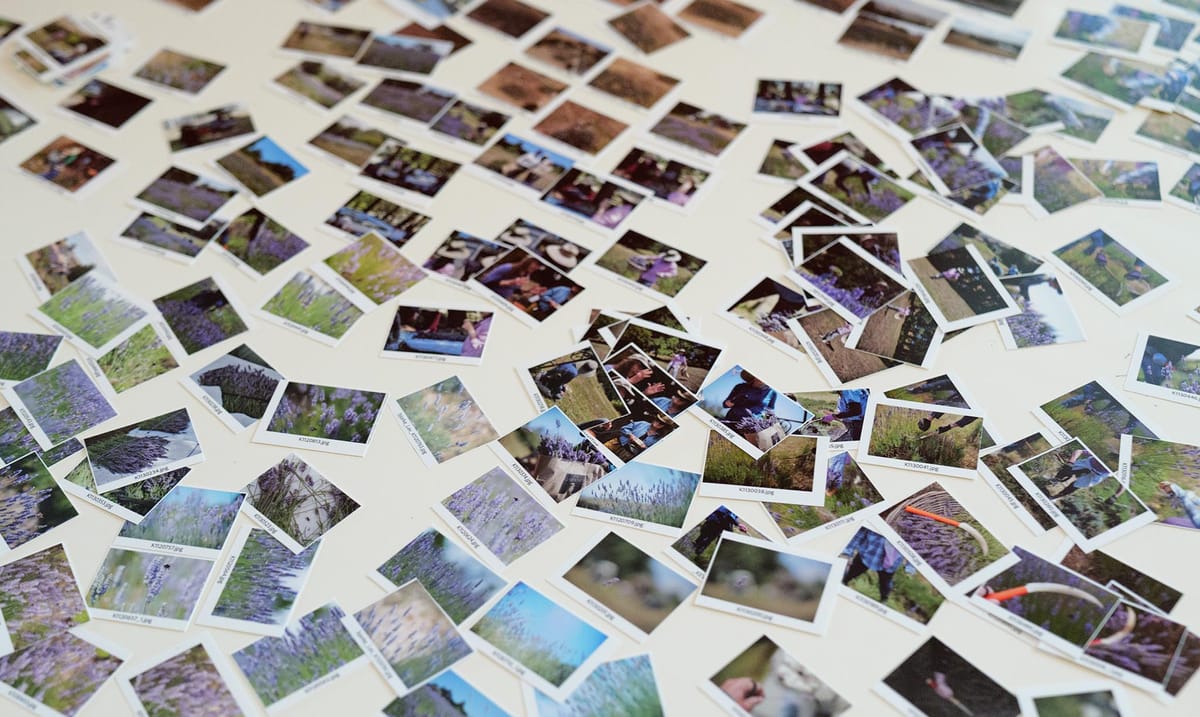
The pic above shows some of about 250 thumbnails that I printed as part of assembling a recent event-album project (on flower harvesting). A very few of the page spreads are beginning to come together on the upper left. Only a fraction of the images behind these thumbnails ended up in the final book.
The way I deploy these is to use Adobe Bridge and Photoshop in tandem with my desktop printer. After doing an initial rough select of images in Bridge, I pull the top 10-15% of them further along.
If the images have come from many different source folders (as these ones did), I run Bridge/Photoshop's "Image Processor" tool (select in Bridge, then run the tool: Photoshop does the work) and make good-quality JPG copies in a single directory.
If there are going to be large blocks of text, I might make thumbnail photos of those (sometimes as screen captures), too.
Next, these copies (or the originals, if all in one folder) are passed to Bridge/Photoshop's "Contact Sheet" tool. I print contact sheets in 6-by-6 arrays, for letter-sized paper, minimal spacing, and I include the filenames as labels. Typically this produces several contact sheet files. All are printed, preferably on photo paper (or presentation matte).
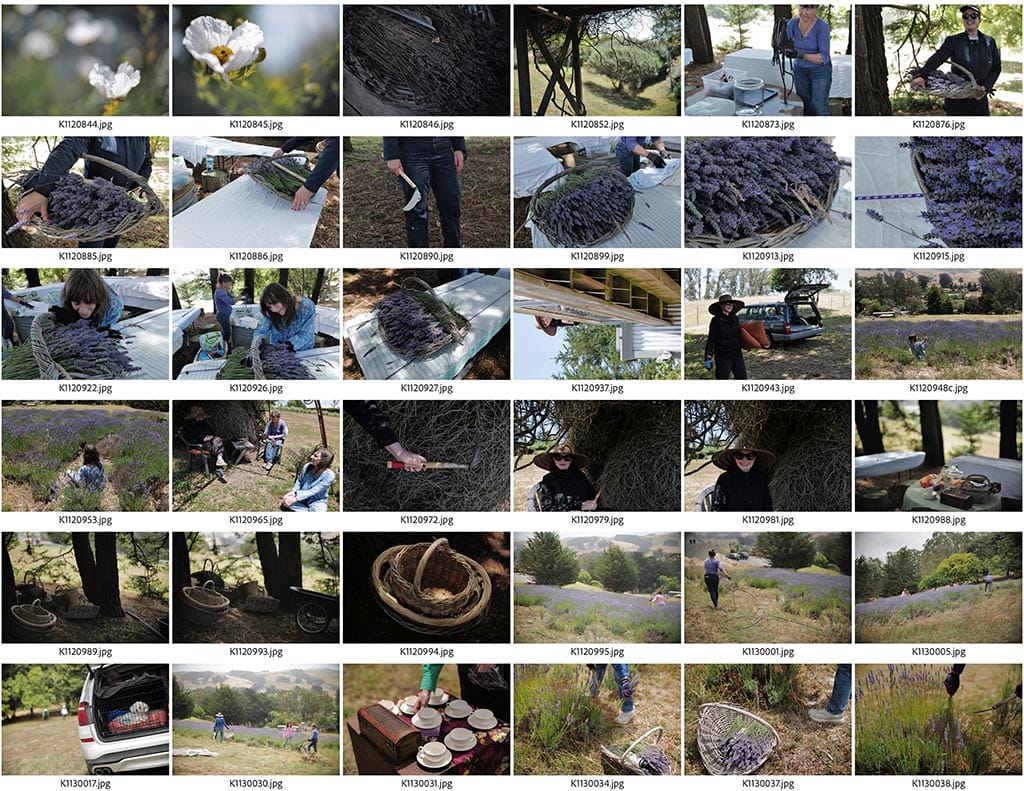
Now those contact sheets head into the paper cutter and scissors: all thumbnails, with their labels attached, are cut apart into little cards. They're about the size of a mounted 35mm slide. Collect, shuffle, sort, lay them out on the table.
While some decisions are made while laid-out and being moved around, grouped, and rejected on the table, it's important to also be paying attention while you're collecting the contact sheets, cutting them apart, and first setting them down. Seeing these little items in your hand can change your perceptions. Colors come through. Families of colors. Some things that you thought you knew start to erode, and new ideas appear from the seeming randomness.
Once the ideas of the general flow are starting to clarify, I get back into Bridge and start marking ordered selections, then start getting them onto InDesign pages ASAP.
The paper thumbnails are great, you can arrange to see across many pictures at once. But you also need to see the pictures on a page, and in two-page spreads, and start to page-through your project, spread-by-spread, as if it's there in final form.
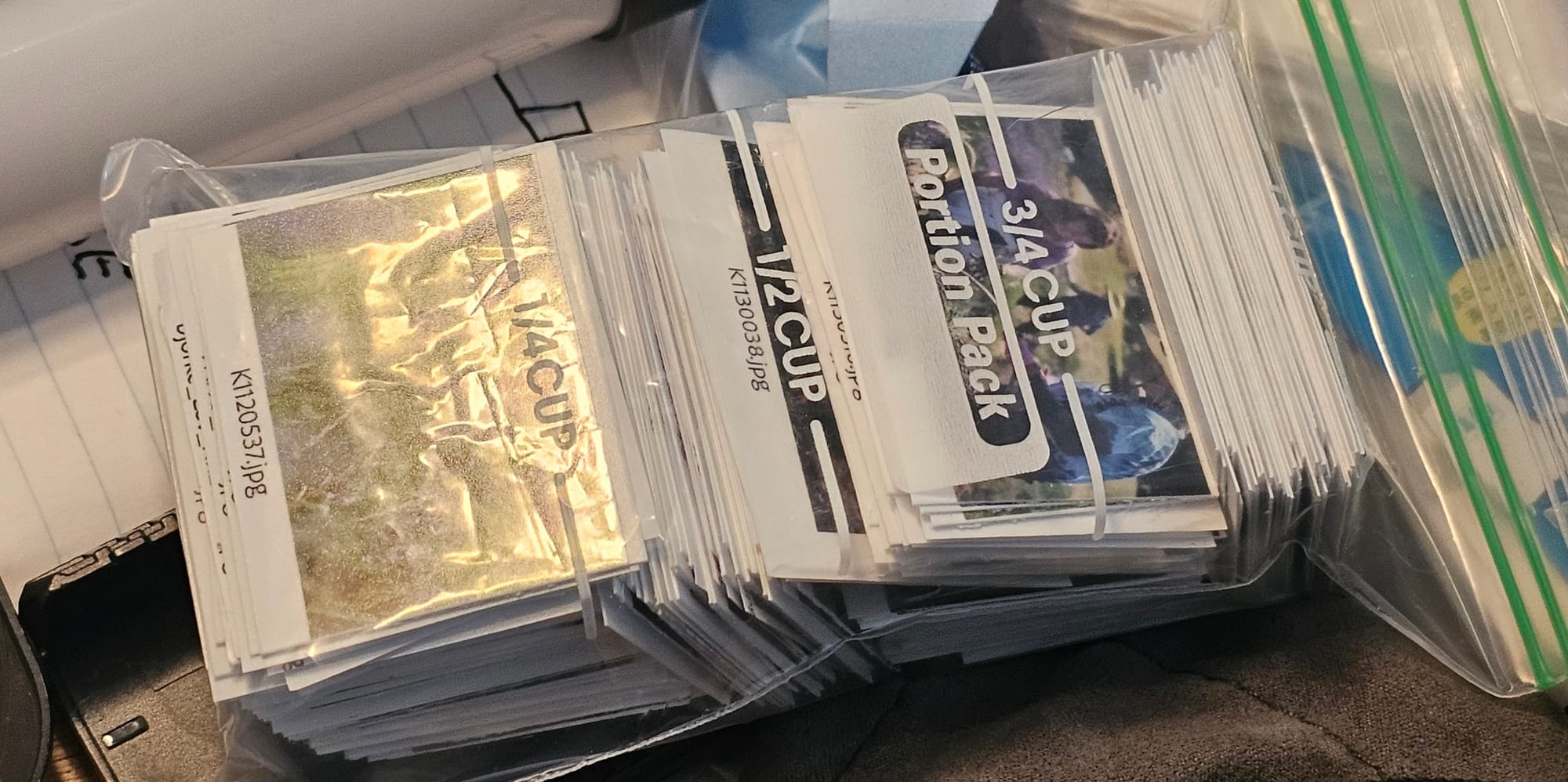
At some point, the thumbnails have done their jobs, it's all electronic again, and the cards can be put away. I use snack-size ziploc bags for storage. As you can see, this was a 3/4-cup project.